

Note from Haley: This is Chapter 2 of my grief memoir, Grief, Four Ways, my story of the first twelve months after unexpectedly losing my dear sister, Lindsey. If you haven’t already, I highly suggest starting with the Introduction.
Childhood
My mother brings us everywhere with her in our early years of childhood. We visit Joanne’s fabrics, where we hide inside the islands of fabric bolts while my mother picks up a few yards for a new project. We visit furniture stores with her, testing every mattress and couch. We spend a fair amount of time at Borders and Barnes & Noble while she flips through art books and painting guides. When we arrive at each errand, Lindsey and I are told the same thing: ‘go explore’. My mother does not seem particularly worried about kidnappers–she is eager to shop around while we are occupied.
Of the various errands, the book stores are our clear favorites. Sure, there are plenty of child-relevant things to peruse, but in the book stores, we have a mission. When we arrive, we immediately hunt down the large, upholstered chairs. These chairs are comfortable and large enough that they allow us to sit in the same seat together–but much more importantly, they are a gold mine. It is in these chairs that adults with large, deep pockets always seem to sit, and while said adults are distracted flipping through a book that they will probably not buy, their large, deep pockets open up and spill out coins amidst the cushions. We are in search of this buried treasure.
We hop from chair to chair, sifting between cushions, rummaging for coins, combing through detritus until, a-ha! We grab the found coins like we’re on an Easter egg hunt and once we’ve visited all the seating areas across the store, we run off to show our mother the spoils of our scrappiness.
April—June 2023
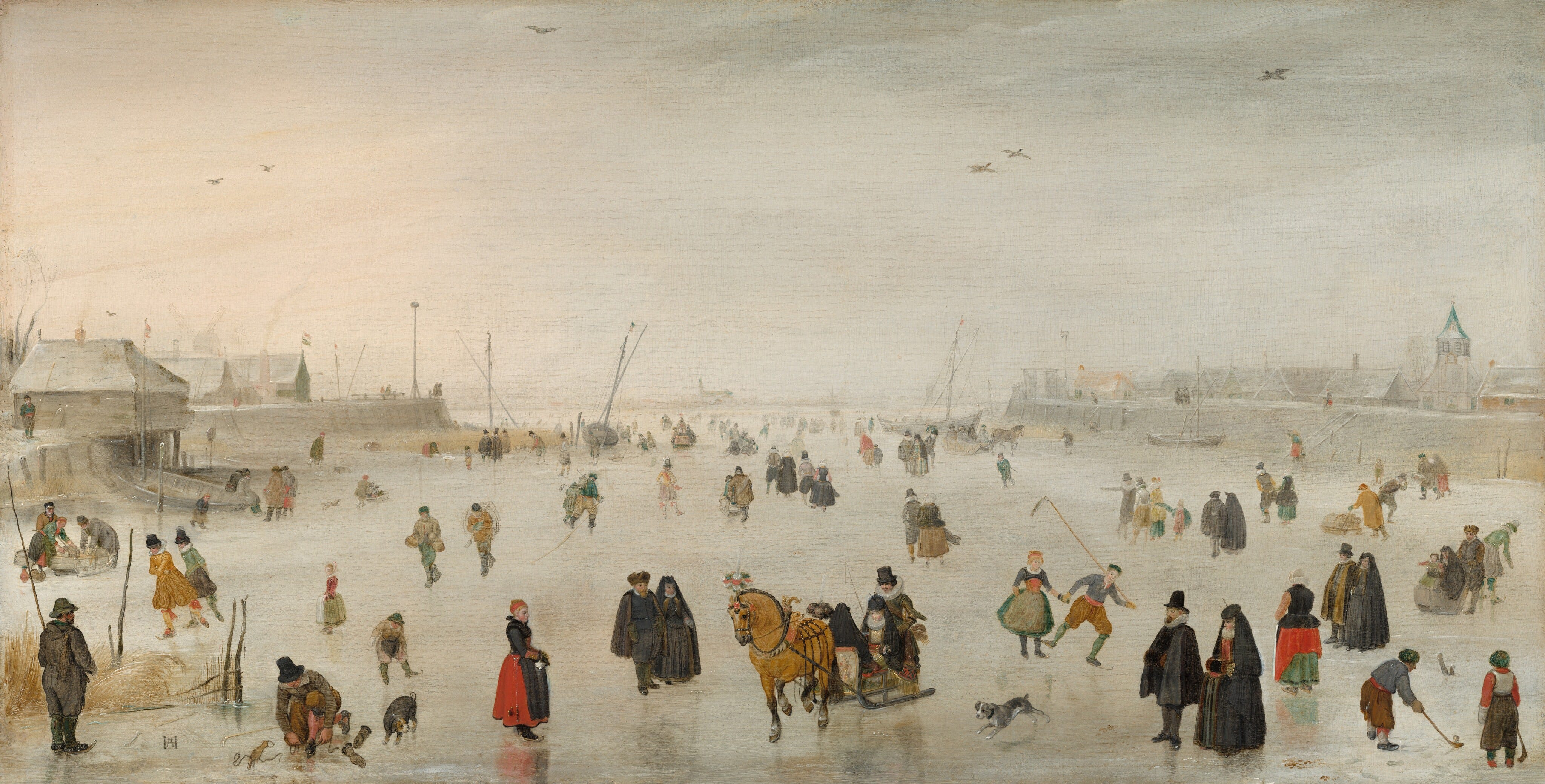
As our family resumes normalcy, I am reminded how much I hate the month of April, particularly in New York. Early spring is cruel in the Northeast because winter has technically ended, but the rain and cold and even the snow refuse to stop. New seasons are supposed to be synonymous with change, but early spring ironically seems like an extension of winter.
This is how April feels in the wake of Lindsey’s passing. I left Colorado thinking I would move onto a new chapter. Lindsey had passed: it was time to begin grieving, begin healing, begin whatever new life existed on the other side of her.
But even though time is ticking, I am frozen in the week of March 24. There is no spring inside of me, no new growth, no warmly tilled soil. I try to grieve, but tears do not come on cue as I expect. I wonder what I can do to move forward, but no matter how hard I try, I am mentally cemented in room 427 with the constant torture of feeling like I should be doing something, but knowing none of it will make any difference. I am frozen.
Since grief hasn’t made his debut, I choose to do everything I can to prepare for grief, so that when he comes, I can handle him swiftly. Attempting to endorphin myself away from clinical depression, I run more. I limit caffeine, hoping for appropriate amounts of sleep. As a means of inducing some healing revelation, I am constantly reading my Bible and spending time in prayer.
This time reading the Bible and in prayer is surely energy well spent, but it feels like pulling teeth. Even with all the sincerity I have poured into my faith in the many years before Lindsey’s passing, and even as I steadfastly believe, in the face of all of this, that God is still good and he loves me (and Lindsey), when I sit down to read the Bible or pray, I feel… nothing.
One afternoon, an acquaintance off-handedly reminds me of the mythical species described in Harry Potter called thestrals. Thestrals are winged horses that most notably are only visible to people who have seen death. Harry learns this in Book 5, when he sees the thestrals for the first time and realizes that for years the animals have been at Hogwarts, ferrying students around in the school carriages. Harry simply hadn’t been able to see them before.
“Death changes how you look at things” my new friend says to me.
But curiously, it seems that to be able to see a thestral, it’s not simply that someone has to witness death, they also must deal with their grief, which is apparently why Harry can’t see the thestrals at the end of the fourth book, even though at that point he had already witnessed a classmate’s death. It is only the following year, once he has properly dealt with his grief, that he spots the thestrals for the first time.
But this begs the question: how does one grieve? How am I supposed to “deal with” grief? Practically speaking, what am I actually supposed to do? Sit around and think about Lindsey? Meditate on her last moments in the OR, as we painfully watched her heart rate decline? Should I lay in bed, replaying the moment when I first heard about her stroke? Those feel like ridiculous options–as if suffering is synonymous with healing.
And yet, even with all that I am doing–the running, the healthy habits, the time in prayer, I feel like I am getting nowhere. I tell friends I feel like I am walking on a glass floor, my feet are not on stable ground. I can see the real ground–the ground of grief–two feet below where I seemed to be floating. But as well as I knew that ground exists, I know I am not on it. I am sifting and searching, like I’m hunting for coins at Barnes & Noble, but I am frozen, my grief inaccessible.
I begin to wonder: if the emotions haven’t come one their own yet, will they ever? Am I supposed to shatter this glass floor myself, or wait for it to crack?
Books about grief show up on my doorstep. My mother sends them, I order some, and friends share what offerings they have. As grief evades me, I try to access it via osmosis: I am a sponge, absorbing what anyone and everyone has to say about losing a loved one.
I meet acquaintances for coffee who have lost siblings and cry with the others left-behind. It is good to feel seen, but I do not walk away with any answers about how to grieve. Do you have other siblings? I ask all three of these women. No.
I devour the books, the coffee dates, the podcasts, looking for the keys that will keep me away from clinical depression. I know enough to know that depression can be unpredictable, catching you off guard like a thief in a dark alley. “I was fine, everything felt normal and then, I couldn’t get out of bed” someone tells me of her own story. We have two small children and no family in New York. Me not getting out of bed is not an option. I think of the glass floor between grief and me, stubbornly intact. Avoiding depression becomes paramount.
One day, determined to “tackle grief”, I force myself to entertain the question that I have been suppressing:
What are you so scared of? Immediately, fears assemble as if called for battle.
What life will look like without her.
Jumping into the abyss and getting clinically depressed.
Not jumping into the abyss and getting clinically depressed.
What it will be like when my parents pass.
The not-knowing: How deep is it? How long will it last? Where does it stop?
That losing Lindsey is the beginning of a domino effect and that now I will lose my sanity, my own children, my life as I know it.
Being alone.
The thoughts stream out so effortlessly–too effortlessly–I mentally close the box as quickly as I’ve asked the question. Too much, too much, too much. Not now. Not yet.
If that’s the glass floor breaking, I’d rather it stay intact.
My grandmother slipped on ice once. She was walking out of a store in the middle of a Michigan winter. It was early 2000’s–the boom of the minivan. She had a minivan, my mom had a minivan, your mom probably had a minivan, they were everywhere. In fact, they were so ubiquitous that on this particular afternoon, my Nana was awestruck by the sheer amount of minivans in the parking lot.
“Look at all the minivans” she delighted, to no one in particular. A marvel!
She got so caught up in admiring the pack of minivans, she lost track of where the pavement stopped and the ice began and then–she slipped.
There were worried voices, visits to the doctor, but ultimately, no major head trauma. It was just a scare.
“Look at all the minivans” has become a type of code for our family–a way of saying one of us was distracted. Look at all the minivans I sometimes think to myself, after I miss an exit or burn cookies that I forgot to set a timer for.
As I try to conjure some semblance of normalcy, my life feels like it revolves around the axis of distraction. I am constantly wondering what else I should be doing, remembering a new task, a new to-do, a new need before me as I distract myself away from the gaping hole where my sister used to stand. Am I distracting myself on purpose? Does it matter?
I wonder what Lindsey was thinking that day. I wonder if she, too, was distracted that afternoon when she slipped on ice. She probably thought it was just a scare–she didn’t even fall. She steadied herself. But the whiplash from the slip–even though her skull never made contact with the pavement, the way my grandmother’s did, was all it took to set her strokes in motion.
I have never been a meticulous person. I am great with big picture ideas and have been memorizing credit card numbers since the genesis of e-commerce, but for all the unremarkable clothing I have impulsively purchased with the CVCs imprinted into my brain, I have also incorrectly assembled baby gates (not the thing to incorrectly assemble), and once, I accidentally wore my blouse inside out to have my headshot taken (also the only professional headshot my mother has ever been willing to purchase of me because ‘what a great story’).
But one of the most obvious ways my lack of attentiveness presents itself is in my apparent inability to take tags off clothing once I’ve purchased them. If I had a dollar for every time my husband had to remove a tag, I would have a lot more clothing. To be clear, it’s less about the hassle of removing the tag and more about the consummating act of snipping away my last opportunity to return the apparel. Once the tag is off, the shirt is mine–and mine to pay for.
My mother tells me Lindsey was the same way, horrible about removing the tags from clothing. I don’t remember this fact about her. I do certainly remember her borrowing my clothes often, something I had a complicated relationship with. But this idea of her leaving tags on is unfamiliar to me.
It’s odd learning things about someone you knew so well after they’ve passed, similar to seeing a photo of them you’ve never seen before. How did I miss this one? Are there more? This thought dawns on me when one of Lindsey’s friends posts a tribute to my sister on social media, weeks after she has passed. I see the photo before I read the associated text and seeing her face unexpectedly is disorienting, jarring me from my otherwise mindless social media consumption.
The picture prompts a similar response to the many moments when I’ve briefly forgotten about her passing and I’ve thought to myself, like a reflexive muscle: I need to call Lindsey.
It never takes more than a moment for my mind to connect with reality, (Oh, it must be an old photo, silly me) but even so, the dated picture of Lindsey nonetheless shakes part of me awake. For a split moment, my eyes told my brain that she was still alive, that she was well, that it had simply been a while since we had last spoken.
I want more pictures from this dinner, more information (Which restaurant was this? Was she wearing her favorite jeans? Was she happy?) as if answers to such questions might make her seem real again. I am hyper-fixated on these questions for a moment, but it is just a coping mechanism, a way to busy myself after having been re-reminded that she is no longer here.
But my subconscious continues to argue with reality regarding the whereabouts of my sister. I know she is gone. Really, I do. I have the photos and the text messages and the program from her memorial service to prove it. And yet, the deep recesses of my mind remain in denial. And can I blame them? My sister shows up in dreams, Instagram assumes she will be my most likely DM, and my photos app has quickly learned that I will click on any picture of her, thus it constantly serves me auto-generated albums of Lindsey with titles like ‘Remember When’.
Since her absence, she is everywhere and on many levels, I treasure the split seconds when in a moment of ignorant bliss, I think you need to call Lindsey. I know these moments are not grounded in reality, but they nonetheless have a familiar safety in them, like for a moment I have stepped in from the cold.
I return to the picture of her and screenshot it. I don’t really know why I do this: I have many, much better, more recent photos of her. But it still feels like I’ve uncovered a part of her I had not seen before–a remnant that may have otherwise been lost–and I want to keep it safe.